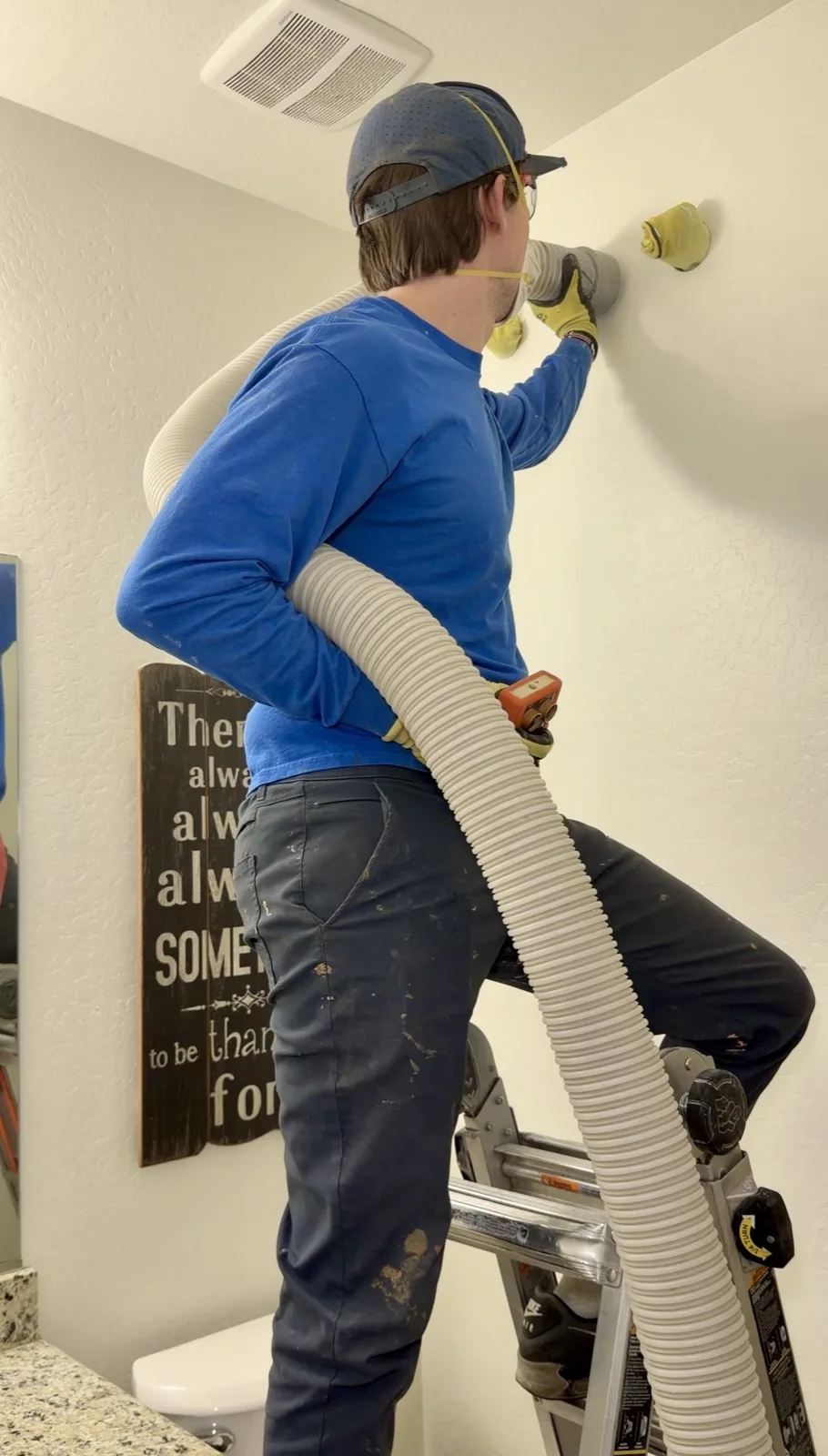
Why Is My Arizona House Still Hot in October?
It’s finally cooling off outside — so why is your Phoenix home still hot and your SRP bill still high? Here’s what’s really going on, from a local insulation and HVAC team.
 By the AZ Insulation crew 10 min read Updated October 2026 BPI-certified · ROC# 301682
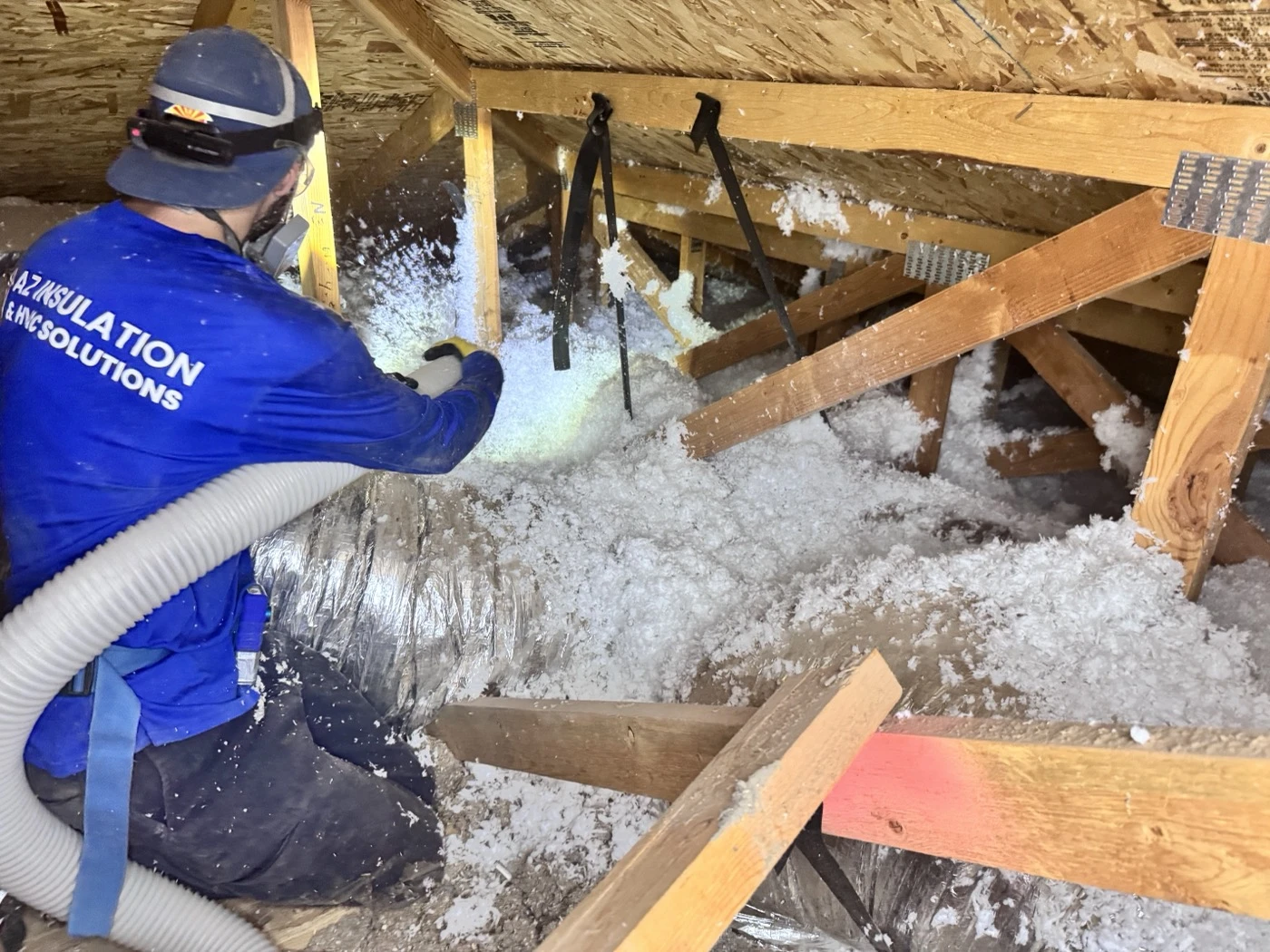
The mornings are finally nice. You’ve opened the windows for the first time since April. And yet by 3 p.m. your house is stuffy again, the AC is still running, and your SRP bill didn’t drop nearly as much as you hoped.
You’re not imagining it. This happens to a lot of Valley homeowners every October — and it’s usually telling you something useful about your house.
Why is my house still hot in October when it’s cooler outside?
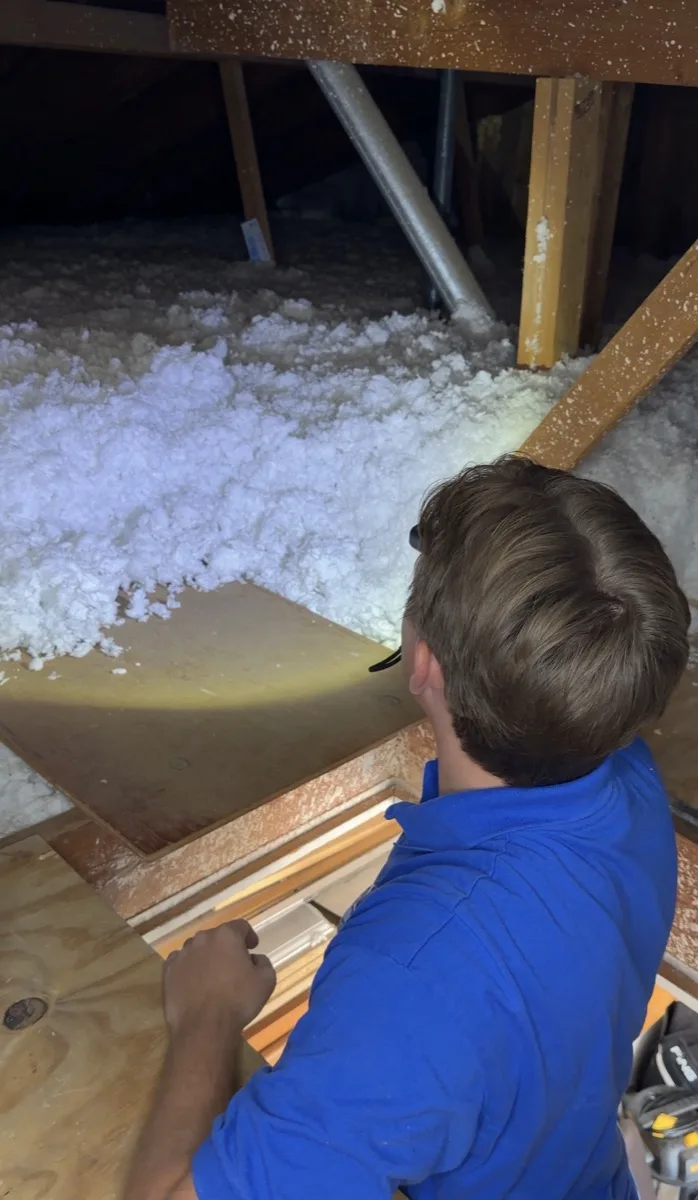
Because your attic is still hot, even when your yard isn’t. On a 90°F October afternoon in Phoenix, an under-insulated attic can still climb past 120°F — and that heat spends all evening pushing down into your living space.
Here’s the part most people miss: the sun angle is lower in October, but it’s still beating on your roof for ten-plus hours a day. Your roof deck soaks it up. Your attic turns into an oven. And the only thing standing between that oven and your bedroom is the insulation sitting on your ceiling.
If that insulation is thin, settled or patchy, the heat gets through. It doesn’t care what the thermometer on your patio says.
Why is my electric bill still high when it’s cooling down outside?
Because your AC is still running long cycles to fight heat that’s leaking in from above — and a system that runs longer costs more, no matter the season. A lot of Valley homes see their October bill drop far less than they expect, and attic insulation is the most common reason.
Think of it this way. In July, everybody’s bill is high and nobody questions it. In October, the outside temperature gives you a fair test. If your house still can’t hold a comfortable temperature without the AC grinding away, that’s your home telling you the problem was never just the weather.
How much attic insulation should an Arizona home have?
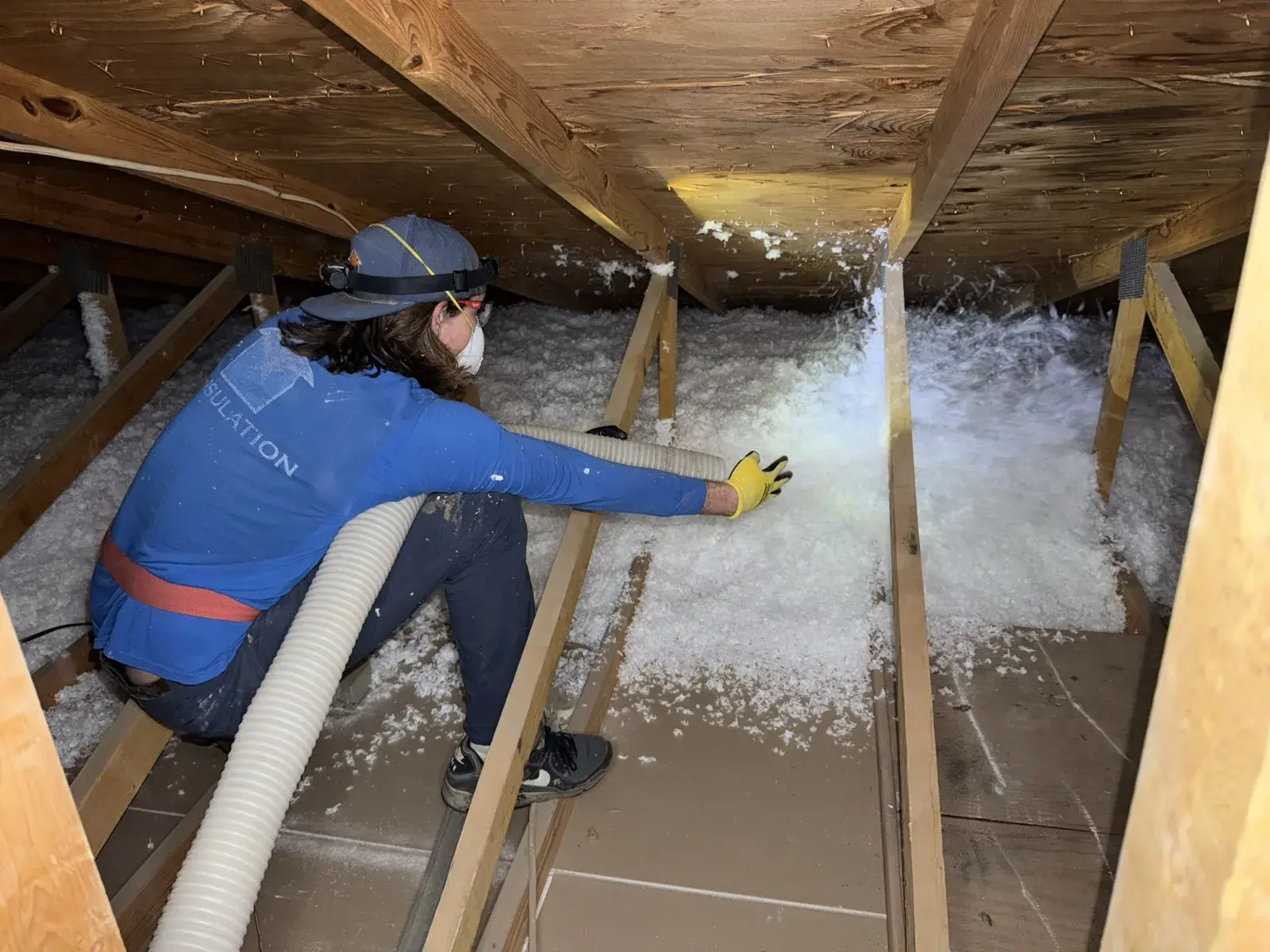
Most Phoenix-area attics should be at R-38 to R-49. With blown-in fiberglass, that’s roughly 14 to 18 inches of depth sitting evenly across your attic floor.
For years the standard around here was R-38, which is about 14 or 15 inches. Plenty of Valley homes were built to that — or to less. Homes from the 80s and 90s often started around R-19 or R-30, and insulation settles and compresses over time, so what went in thirty years ago isn’t what’s up there now.