All articles
Attic insulation · Depth & measuring

How Many Inches of Attic Insulation Should I Have in Phoenix?

R-value is a lab number printed on a bag. Inches are the thing you can actually see — and the number that decides whether your ceiling is holding heat out or letting it in.

By the AZ Insulation crew 10 min read Updated August 2026 BPI-certified · ROC# 301682
A depth ruler set against a truss in a Phoenix attic to verify blown-in insulation depth.
An attic ruler set against a truss — how you verify you actually got the depth you paid for.
Quick answer

A Phoenix attic should have about 13 to 14 inches of blown fiberglass, which is roughly R-38. R-38 is the level SRP’s residential insulation rebate program requires Valley homes to reach, and it is the minimum AZ Insulation & HVAC Solutions recommends. If the reading comes back at 6 or 7 inches, you are at roughly R-19 — half of what you need.

R-value is a lab number printed on a bag. Inches are the thing you can actually see, and one converts into the other in about five minutes.

Below is the depth chart by material, what the upgrade actually costs on a typical Chandler home, and how to have us measure it for free in Mesa, Chandler, Gilbert, Queen Creek, Glendale, Goodyear, or anywhere in the Valley.

How many inches of attic insulation is enough in Phoenix?

Thirteen to fourteen inches of blown fiberglass is the target for a Phoenix attic. That depth puts most blown fiberglass products at about R-38, the standard SRP’s rebate program is built around and the level we recommend for Valley homes. Blown cellulose is denser, so roughly 10 to 11 inches reaches the same R-38 — on install day, anyway, a distinction we will get to.

If your attic reads 10 to 11 inches of blown fiberglass, you are at roughly R-30. At 6 to 7 inches you are near R-19. Both readings are common in Valley homes, and both are short.

The number most Valley homeowners find: about 7 inches short

When our crews measure Phoenix-area attics, the typical home comes up roughly 7 inches shy of where it should be. That is our own field observation, and the math is easy to check:

DepthRoughly
What SRP requires13–14 in blown fiberglassR-38
What we typically find6–7 inR-19
The gapabout 7 inhalf the R-value
Our own field observation across Valley attics. R-19 is what SRP treats as deficient; R-38 is what its rebate requires you reach.

That gap lines up exactly with SRP’s own thresholds: below R-19 is what SRP’s rebate program treats as deficient, and R-38 is what it requires you reach. So if our reading comes back in the single digits, that is not unusual and it is not your fault. It is just the number to act on.

Free · no obligation

Rather not crawl a 150-degree attic? We will measure it.

We measure the depth in three or four spots, identify the material, photograph the problem areas, and tell you the real R-value your home is living with. Free, and no obligation.

Book My Free Attic Measurement or call 480-662-2874

Inches to R-value, by what you will actually find up there

Depth alone does not tell you the R-value, because each material delivers a different R-value per inch. Use this to translate the depth we measure into the number that matters.

MaterialLooks like≈ R-19≈ R-30≈ R-38
Blown fiberglassWhite, yellow or pink fluff6–7 in10–11 in13–14 in
Blown celluloseGray-brown shredded paper5–6 in8–9 in10–11 in
Fiberglass battsBlankets between joists6 in (R-19 batt)9–10 in12 in
Rock wool / mineralDense gray-brown wool5–6 in8–9 in11 in
Depths are rough and vary by product — R-value per inch is printed on the manufacturer’s coverage chart. Treat this as a field estimate, not a spec sheet.

If your attic has cellulose, do not trust the original invoice

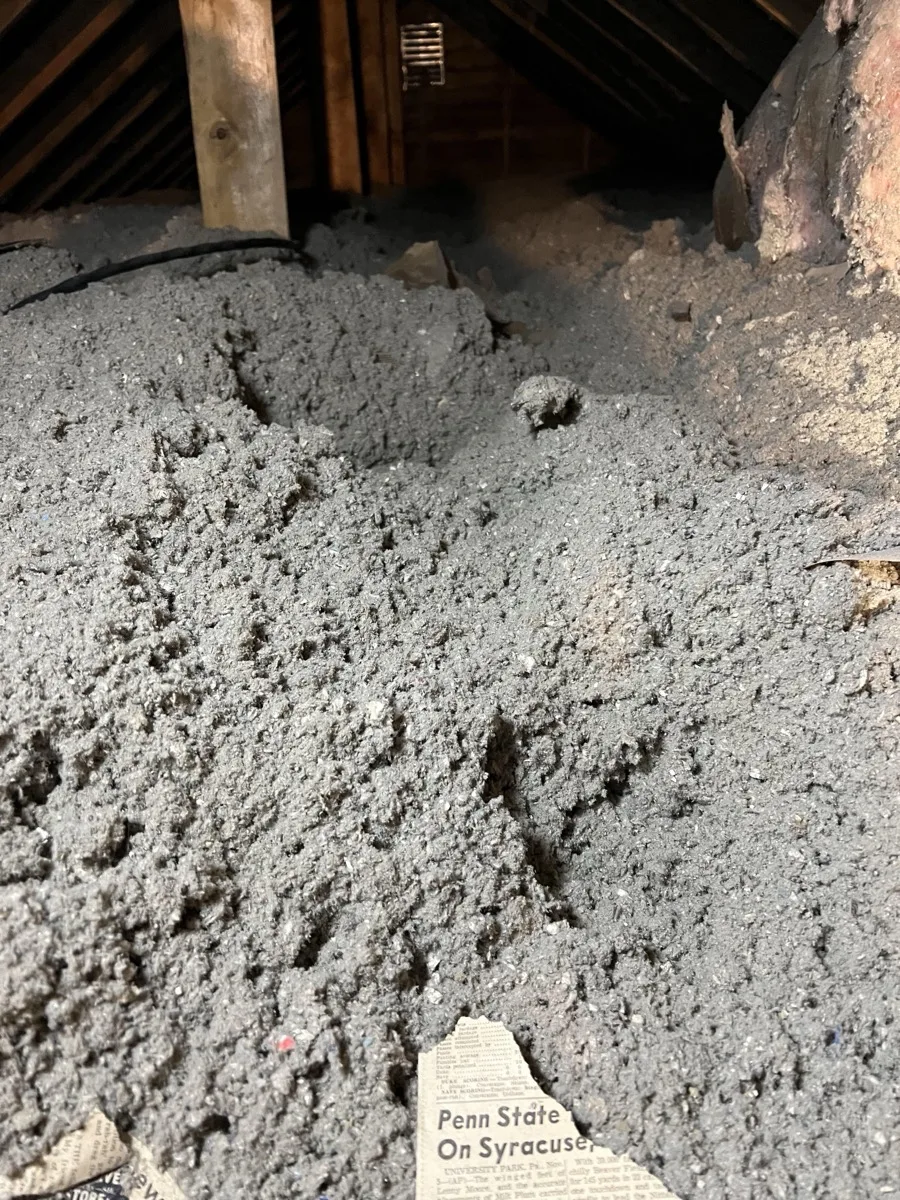
This is the one worth checking on. Cellulose settles. If your attic was insulated with cellulose, you may be surprised what is actually left up there. The 12 inches someone blew in years ago is not necessarily 12 inches today, because cellulose compacts under its own weight. Nobody did anything wrong — the material simply behaves that way.

Cellulose is a legitimate product with real strengths. But blown fiberglass does not settle. It holds its installed depth, so the R-38 you pay for is the R-38 you still have in fifteen years. In an attic you would rather not open twice, that difference compounds: insulate properly one time and you are done. AZ Insulation & HVAC Solutions backs every fiberglass attic insulation job with a lifetime warranty covering both the material and our installation.

Decades-old gray cellulose insulation settled flat in an Arizona attic.
Settled cellulose. The depth on the original invoice is not the depth today.
A technician blowing loose-fill fiberglass across an Arizona attic floor.
Blown fiberglass holds its installed depth — the R-value you pay for is the one you keep.

Have us measure it — free

We do not recommend crawling your own attic to check. Phoenix attics are commonly measured at 150 to 160°F in summer, the footing between joists is unforgiving, and a bad reading sends you down the wrong path anyway.

So let us do it. A free attic inspection takes about twenty minutes: we take depth readings in several spots, identify the material, check the perimeter and the can lights for gaps, photograph what we find so you can see it yourself, and tell you your real R-value and how far it is from R-38. We also confirm on the spot whether you qualify for the SRP rebate.

No charge, no obligation, and no pressure — if your attic is already in good shape, we will tell you that and leave your money alone.

Up to $600 off

Let’s find out what SRP will cover on your home.

We confirm your rebate eligibility during your free inspection, file every form for you, and apply the discount straight to your invoice. Zero paperwork on your end.

Check My Rebate Eligibility or call 480-662-2874

Why do Phoenix homes end up short on inches?

Three reasons, and none of them mean somebody cheated you. Minimums were lower when most Valley homes were built. Cellulose settles, so an attic blown to 12 inches two decades ago measures less today. And people walk on it — every service call flattens a path, and compressed insulation does not spring back.

What does it cost to add inches to a Phoenix attic?

Depth is not priced by the inch, it is priced by the job: attic square footage, inches needed, how hard the attic is to move around in, whether the old material has to come out, and how much air sealing the ceiling needs.

For a concrete anchor, here is the typical case — a Chandler home coming up the seven inches from R-19 to R-38 in blown fiberglass:

Typical Chandler atticPrice
Add ~7 in of blown fiberglass, R-19 → R-38$2,070 before the rebate
SRP instant rebate− up to $600
Your price after the rebateas low as $1,470
Typical single-story Chandler attic. Your number depends on square footage, attic access, and how much air sealing the ceiling needs.

If the old material has to come out first, removal and disposal runs $2,000 to $2,600 per 1,000 square feet, depending on the material, the depth, and how difficult the attic is to work in.

SRP’s residential insulation rebate covers up to 75% of professionally installed attic insulation, up to $600, applied instantly on the invoice by a BPI-certified, Arizona-licensed contractor — details at srpnet.com, current as of publication.

One more thing worth mentioning when we come out: if a single room runs hotter than the rest, and the insulation over it measures fine while the room is still 85 degrees, more inches will not fix it — a ductless mini-split will.

Frequently asked questions

Questions Arizona homeowners ask us

Is 6 inches of attic insulation enough in Phoenix?
No. Six inches of blown fiberglass is roughly R-19, about half of the R-38 that SRP’s rebate program requires Valley homes to reach. Six to seven inches is one of the most common readings we find in Phoenix-area homes built before 2000, and it is the reading that puts a home at the bottom of the 7-inch gap.
How do I tell if my attic insulation is fiberglass or cellulose?
Blown fiberglass looks like white, yellow, or pink fluff. Blown cellulose looks like gray or brown shredded newspaper. From the hatch it is usually obvious which one you have, and we identify and photograph it during the free inspection. The distinction matters twice: cellulose delivers more R-value per inch, and cellulose settles over time while fiberglass holds its installed depth.
Should I measure my own attic insulation, or have someone do it?
Have a professional do it. Phoenix attics are commonly measured at 150 to 160 degrees Fahrenheit in summer, the footing between ceiling joists will not hold your weight, and a single compressed reading gives a misleading number. AZ Insulation & HVAC Solutions measures depth in several spots, identifies the material, photographs the attic, and confirms SRP rebate eligibility at no charge.
Does cellulose insulation lose R-value over time?
Cellulose settles, and a shallower layer means a lower R-value. An attic blown to 12 inches of cellulose years ago will not necessarily measure 12 inches today, because the material compacts under its own weight. Blown fiberglass does not settle, so its depth and R-value stay put. Measure what is in your attic now rather than trusting the original invoice.
Free · no pressure

Want the Measurement Done for You?

We will measure the depth, identify the material, photograph what we find, and tell you the real R-value your home is living with — plus what SRP will cover. Free, no obligation.

$5M+ in rebates secured for AZ homeowners
BPI-certified, participating SRP contractor
4.9★ from 550+ local reviews
Lifetime no-settling warranty
Prefer to talk? Call 480-662-2874
AZ Insulation & HVAC Solutions
Family-owned in the valley since 2014 · BPI-certified · 4.9★ from 550+ reviews
Get my free quote

Keep reading

Rebates
Every Arizona insulation rebate available in 2026
Mini-splits
The fix for one room that’s always too hot
HVAC
Insulate before you replace your AC — here’s why
@azinsulation
Real jobs from around the valley — follow along
Follow us
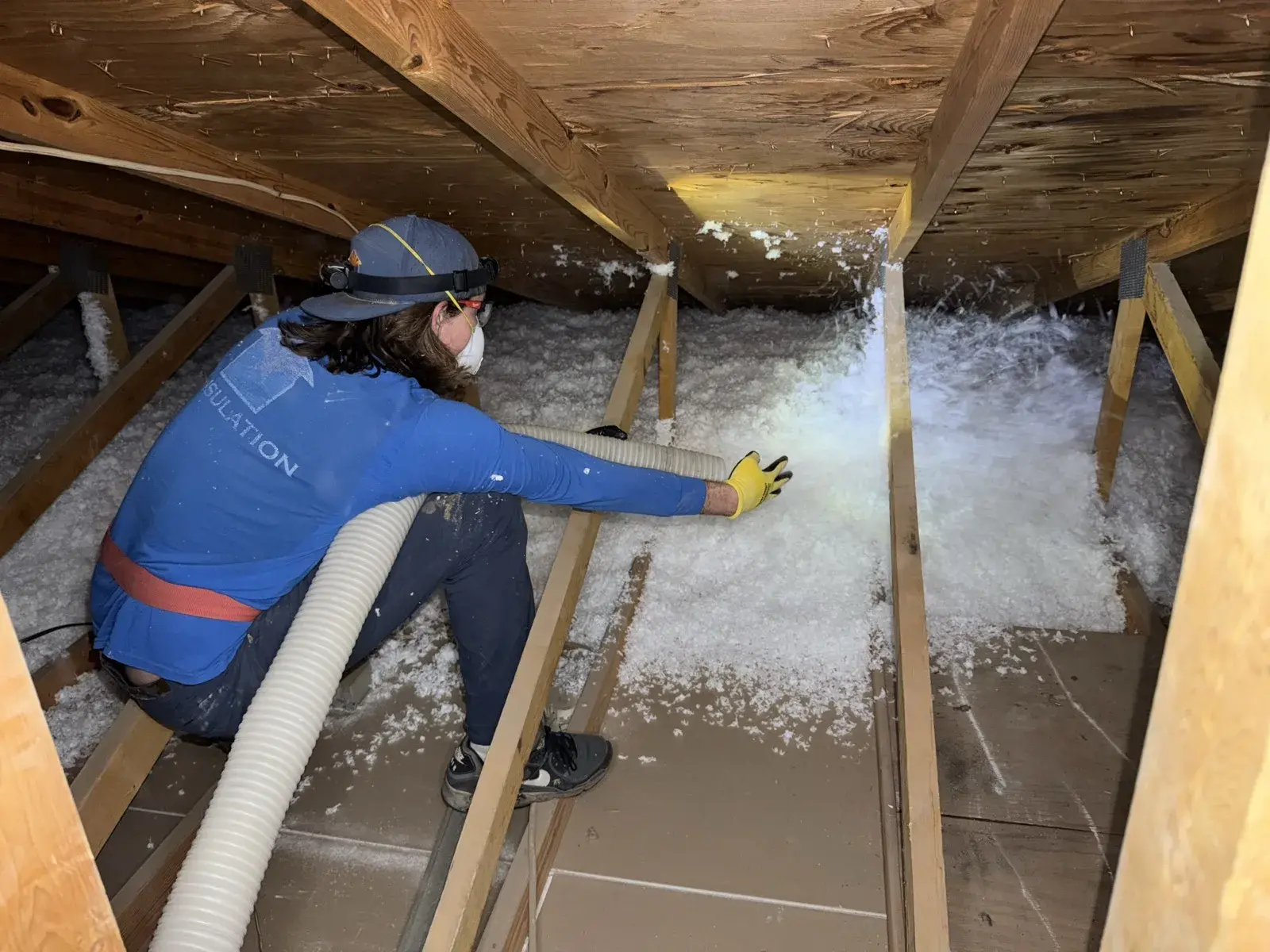
Even blown-in fiberglass coverage across a finished Mesa attic
248
Another Mesa attic, finished and rebate-ready.
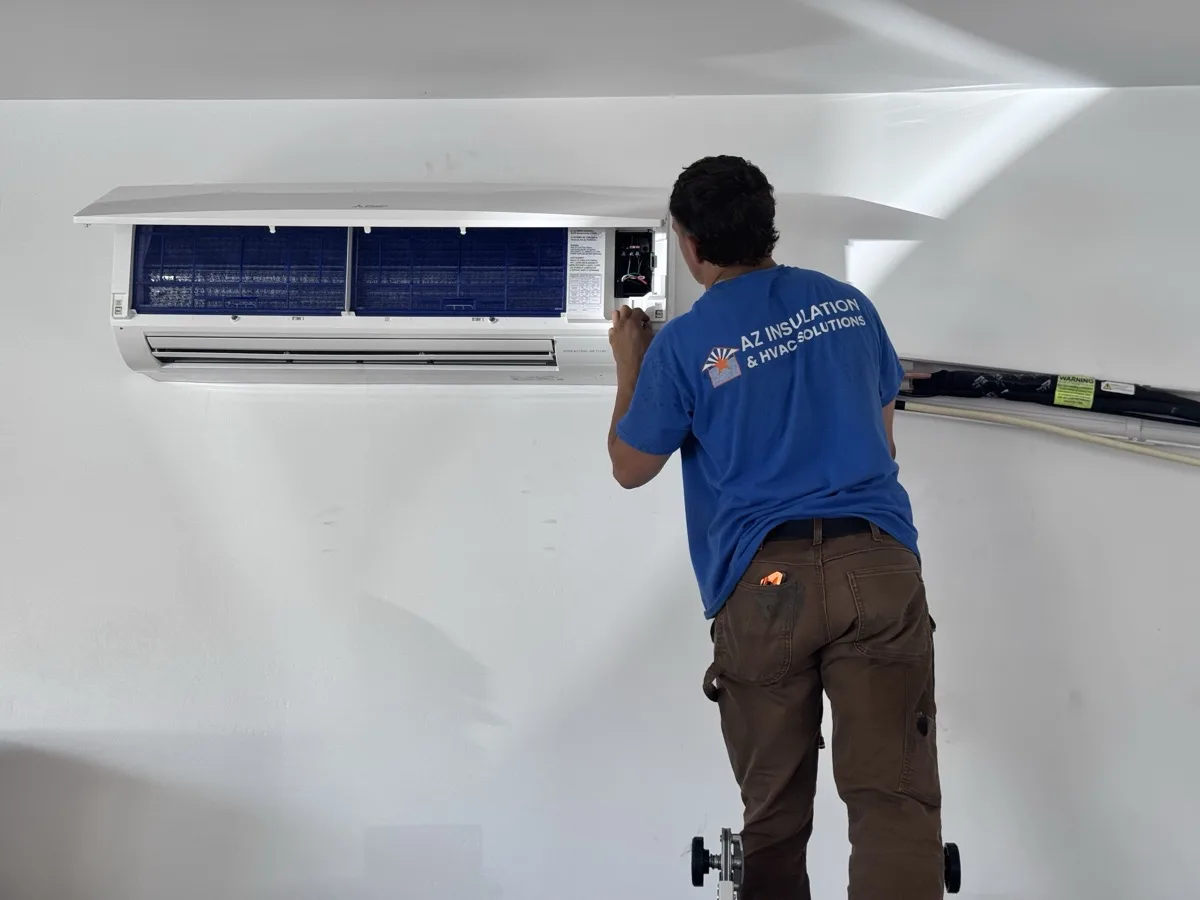
Mini-split install in a Gilbert garage conversion
192
Mini-split install in a Gilbert casita — quiet & cool.
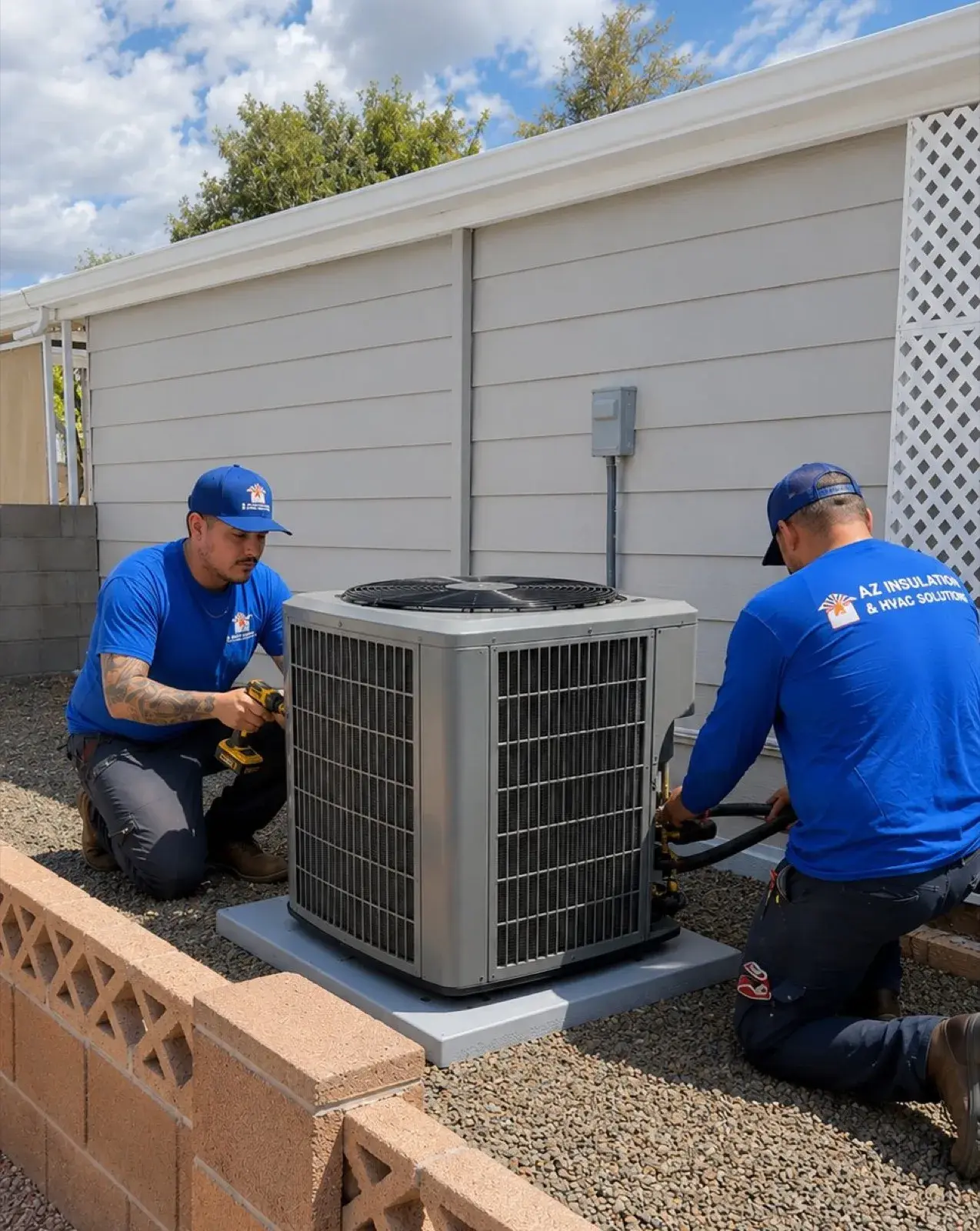
New high-efficiency AC install
314
New high-efficiency AC, sized right for the AZ heat.
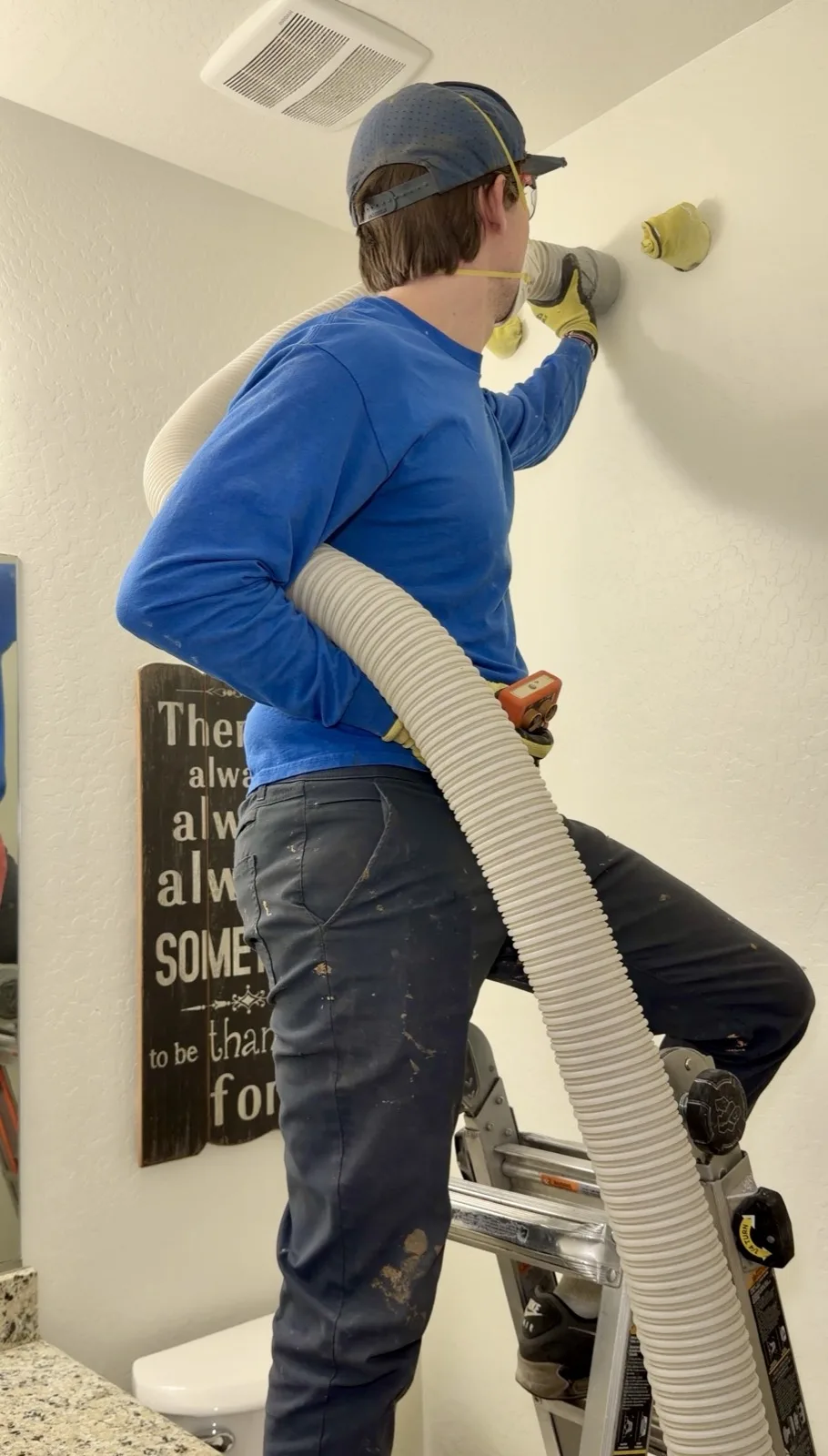
Wall insulation on a Chandler remodel
176
Sealing up the walls on this Chandler remodel.
Not sure how many inches are up there? We will measure it free.
Free inspection & rebate check · up to $600 off with SRP · no pressure
480-662-2874 Get my free quote