AZ Insulation & HVAC Solutions home
480-662-2874 Get a Free Quote
All articles
HVAC lifespan · Arizona

How Long Do AC Units Last in Arizona?

The variable isn’t luck. It’s hours, heat, and maintenance. We regularly service 17-year-old units that were installed well, and condemn 9-year-old units that were never touched.

By the AZ Insulation crew 11 min read Updated August 2026 BPI-certified · ROC# 301682
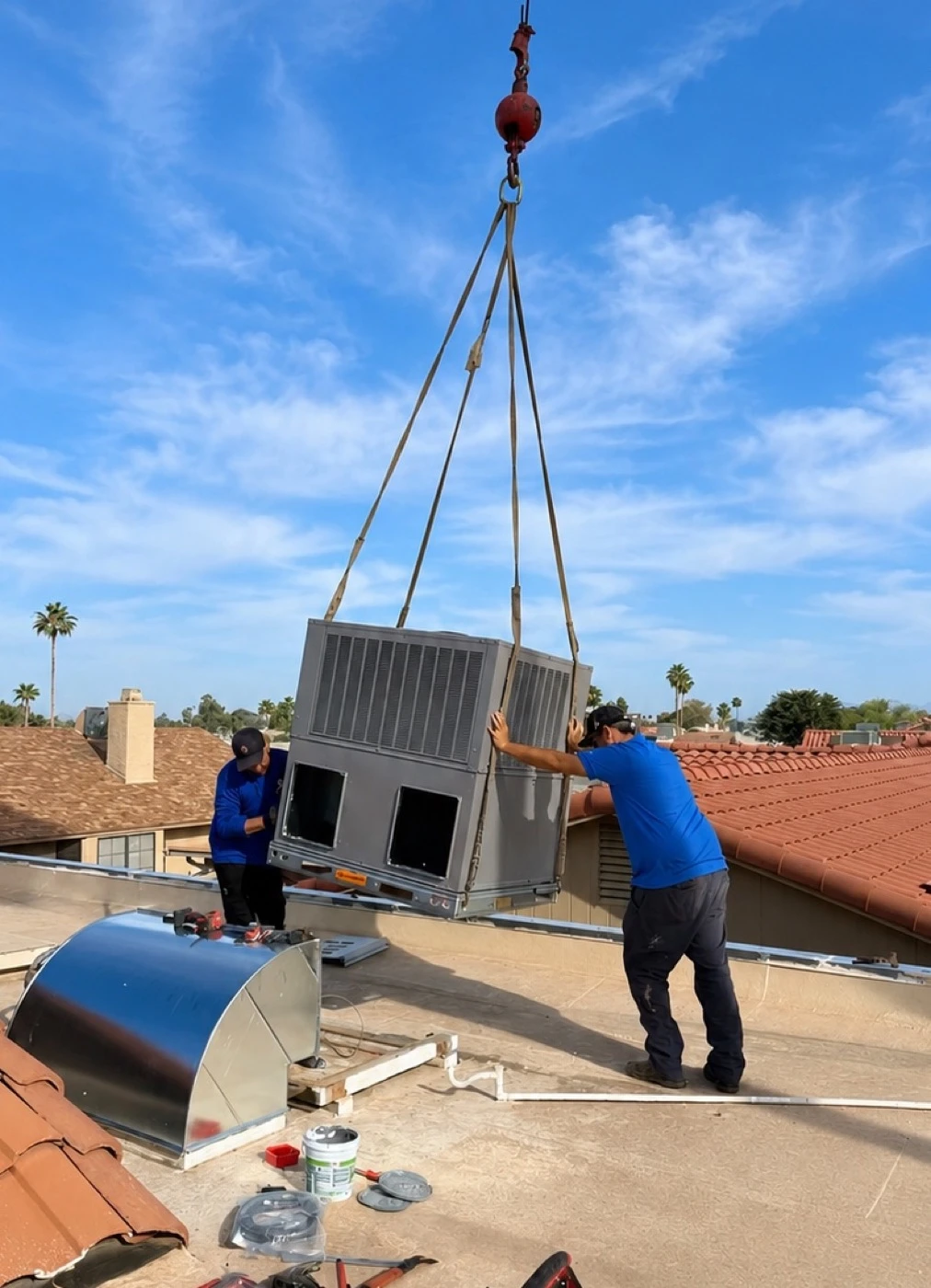
Two AZ Insulation technicians guiding a new packaged HVAC unit into place by crane on an Arizona tile rooftop.
Equipment life tracks operating hours. The most effective way to extend an AC in Phoenix is giving the system less work to do.
Quick answer

Most air conditioners in Arizona last 10 to 15 years, compared with 15 to 20 years nationally. Phoenix-area systems run far more annual hours and face 110°F+ conditions at the outdoor condenser, which shortens equipment life. Well-maintained systems in shaded, well-insulated homes reach the top of that range.

That 10–15 year figure is what’s commonly cited for Arizona and what our AZ Insulation & HVAC Solutions techs see across Mesa, Chandler, Gilbert, Queen Creek, Cave Creek, Gold Canyon, Glendale, Goodyear, and Surprise. It is not a hard statistic and not a countdown clock. We regularly service 17-year-old units that were installed well and maintained every year, and condemn 9-year-old units that were never touched.

The variable isn’t luck. It’s hours, heat, and maintenance.

Why do AC units die faster in Phoenix than in other states?

Three reasons, and they compound.

Runtime hours. An air conditioner in Portland might run a few hundred hours a year. A Phoenix system runs from March into November, often near-continuously through the summer afternoons. Equipment life is a function of operating hours, not calendar years — so a Valley AC ages several years for every one on the calendar.

Condenser-side temperatures. The outdoor unit has to reject your home’s heat into the surrounding air. When that air is 112°F, the system operates at high head pressure for hours at a stretch. Compressors, capacitors, contactors, and fan motors all live shorter lives under that load.

Dust. Valley dust, monsoon haboobs, construction sites, and desert landscaping all pack the condenser fins. A coil that can’t shed heat forces the compressor to work harder every day — a slow, invisible wear mechanism.

Lifespan by system type in Arizona

System typeNationalArizona-adjusted
Split-system AC15–20 yrs10–15 yrs
Heat pump15 yrs10–14 yrs
Packaged rooftop unit15–20 yrs10–13 yrs — hardest life
Ductless mini-split15–20 yrs12–18 yrs — often outlasts central
Gas furnace20+ yrs18–25 yrs — light use here
Arizona-adjusted ranges reflect our field experience, not published manufacturer data.

Two things stand out. Rooftop packaged units have the hardest life in the Valley because every component, not just the condenser, sits in direct sun. And mini-splits often outlast conventional systems here: inverter compressors ramp up and down instead of slamming on and off, and they skip the 150–160°F attic.

Free · no obligation

Want more years out of the system you have?

We check the charge, clean the coil, test the capacitor before it fails, and measure what is in your attic — because fewer runtime hours is what buys you years. Free inspection, no obligation.

Book My Free Check-Up or call 480-662-2874

What shortens AC life in Arizona

  1. Skipped annual maintenance. The single biggest one. Refrigerant charge drifts, capacitors weaken, contactors pit, and coils foul — all gradual, all catchable. A system that’s never serviced degrades quietly for years, then fails all at once.
  2. Dust-clogged coils. A condenser coil packed with Valley dust is the equivalent of running a marathon in a parka. It raises head pressure and amp draw, and cooks the compressor over time.
  3. Equipment fighting a hot attic. With R-11 insulation and leaky ducts in a 155°F attic, the AC runs far more hours than the same equipment would in a properly insulated home. More hours, shorter life.
  4. Poor original installation. Incorrect charge, undersized line sets, restricted return air, bad duct design, and a condenser crammed against a wall all shorten life from day one. Install quality matters more than brand.
  5. Hard water and scale. On evaporative-assisted equipment and some packaged systems, Arizona’s hard water leaves mineral scale that reduces heat transfer and corrodes components.
  6. Running it broken. Running a system that’s icing up, short-cycling, or tripping breakers is how a repairable problem becomes a dead compressor.

What extends AC life in Arizona

  1. Annual service, every year, before summer. A spring tune-up catches weak capacitors, low charge, and dirty coils while they’re still cheap.
  2. Clean coils, indoors and out. Change the filter monthly in summer. Keep the outdoor coil clear of dust, dryer lint, and landscaping debris.
  3. Shade on the condenser — without blocking airflow. Shading the outdoor unit lowers the air temperature it’s rejecting heat into. Keep any shade structure well above and clear of the unit, with a couple of feet of clearance on all sides and nothing over the fan discharge. A condenser choked for airflow is worse off than one in full sun.
  4. Correct refrigerant charge. Both undercharge and overcharge stress the compressor.
  5. A properly insulated attic. If your AC runs 30% more hours than it needs to because your attic is pouring heat back into the house, you’re using up its service life 30% faster.

The attic connection: fewer hours, longer life

Equipment life tracks operating hours. So the most effective way to extend an air conditioner’s life in Phoenix isn’t a gadget — it’s giving the system less work to do.

Phoenix attics are commonly measured at 150–160°F in summer. The U.S. Department of Energy places the Phoenix area in Climate Zone 2, and SRP’s insulation rebate program sets R-38 as the minimum for Valley attics. In the attics we inspect, we typically find 6 or 7 inches, or about R-19 — which means most Valley homes are about 7 inches short:

DepthRoughly
What SRP requires13–14 in blown fiberglassR-38
What we typically find6–7 inR-19
The gapabout 7 inhalf the R-value
Our own field observation across Valley attics. R-19 is what SRP treats as deficient; R-38 is what its rebate requires you reach.
A gloved hand setting a CertainTeed InsulSafe depth ruler against a truss in an Arizona attic to verify blown-in fiberglass depth.
Measuring actual depth against the ruler — the difference between R-19 and R-38 is about seven inches, and it decides how many hours your AC runs.

Bringing a Valley attic from R-19 up to R-38 cuts the heat your AC removes all afternoon and evening: fewer runtime hours, a lower duty cycle on the compressor, and a system that reaches the top of the 10–15 year range instead of the bottom.

SRP’s residential insulation rebate currently covers up to 75% of professionally installed attic insulation, up to $600, as an instant rebate on your invoice from a BPI-certified, Arizona-licensed contractor. Homes below R-19 must be brought up to R-38; new construction and mobile homes are not eligible. Confirm current terms at srpnet.com.

Up to $600 off

Fewer hours means more years. SRP helps pay for that.

Bringing a Valley attic from R-19 to R-38 cuts the heat your AC removes all afternoon. SRP covers up to 75% of the installed insulation, up to $600, instantly on your invoice.

Check My Rebate Eligibility or call 480-662-2874

How do I know where my AC is in its life?

Find the age first. The manufacture date is usually encoded in the serial number on the outdoor unit’s data plate — most include the year, many include the week. If you can’t decode it, any tech can.

Then look at the pattern, not a single event:

  • Years 1–8: Expect wear-part failures only — capacitors, contactors, thermostats. Repair without hesitation.
  • Years 9–12: Still repair territory for most failures, but start tracking how often you’re calling. Begin budgeting.
  • Years 13–15: Repair small things, replace on anything major. A failed compressor at this age generally ends it.
  • Years 16+: Every summer is borrowed time. Plan the replacement on your schedule instead of on a 115°F Saturday.

AZ Insulation & HVAC Solutions helps homeowners across the East Valley, Cave Creek, Gold Canyon, and the West Valley get more life out of their equipment — with annual service through our maintenance plans, and with attic insulation that cuts the runtime hours doing the damage. If yours is past saving, we also handle HVAC installation — and we’ll tell you honestly if you’ve got a few good summers left.

Frequently asked questions

Questions Arizona homeowners ask us

What is the average lifespan of an AC unit in Phoenix?
Commonly cited figures put Arizona air conditioner lifespan at 10 to 15 years, versus 15 to 20 years nationally. Phoenix systems run vastly more annual hours and reject heat into 110°F+ air, which wears compressors and electrical components faster. Annual maintenance and adequate attic insulation are what push a Valley system toward the top of that range.
Do mini-splits last longer than central AC in Arizona?
Often, yes. Ductless mini-splits in Arizona commonly run 12 to 18 years. Inverter-driven compressors modulate output instead of hard-starting repeatedly, and mini-split systems avoid ductwork sitting in a 150–160°F attic. They also serve single problem rooms well, which keeps the central system from overworking.
Can regular maintenance really make my AC last longer in Arizona?
Yes, and it matters more here than almost anywhere else. Annual service verifies refrigerant charge, cleans the condenser coil of Valley dust, tests capacitors before they fail, and checks amp draw on the compressor. Each of those directly affects how hard the compressor works every hour it runs — and hours of hard running are what kill Arizona systems.
Does shading my AC unit help it last longer?
Shading the outdoor condenser lowers the temperature of the air it is rejecting heat into, which reduces strain. The catch is airflow: the unit must stay clear on all sides and completely open above the fan discharge. A shade structure that restricts airflow does more harm than the sun it blocks. Keep it high, open, and well clear.
How do I find out how old my AC unit is?
Look at the data plate on the outdoor condenser. Most manufacturers encode the manufacture date in the serial number, often as a year and week. Some units also list a separate manufacture date field. If the plate is faded or the code isn’t obvious, any HVAC tech can identify the age during a service visit.
Free · no pressure

Want More Years Out of the System You Have?

The cheapest air conditioner is the one you don’t have to replace yet. We will check the equipment and measure the attic — because fixing the heat load is what stops the system you already own from working overtime.

$5M+ in rebates secured for AZ homeowners
BPI-certified, participating SRP contractor
4.9★ from 550+ local reviews
Lifetime no-settling warranty
Prefer to talk? Call 480-662-2874
AZ Insulation & HVAC Solutions
Family-owned in the valley since 2014 · BPI-certified · 4.9★ from 550+ reviews
Get my free quote

Keep reading

Rebates
Every Arizona insulation rebate available in 2026
Mini-splits
The fix for one room that’s always too hot
HVAC
Insulate before you replace your AC — here’s why
@azinsulation
Real jobs from around the valley — follow along
Follow us
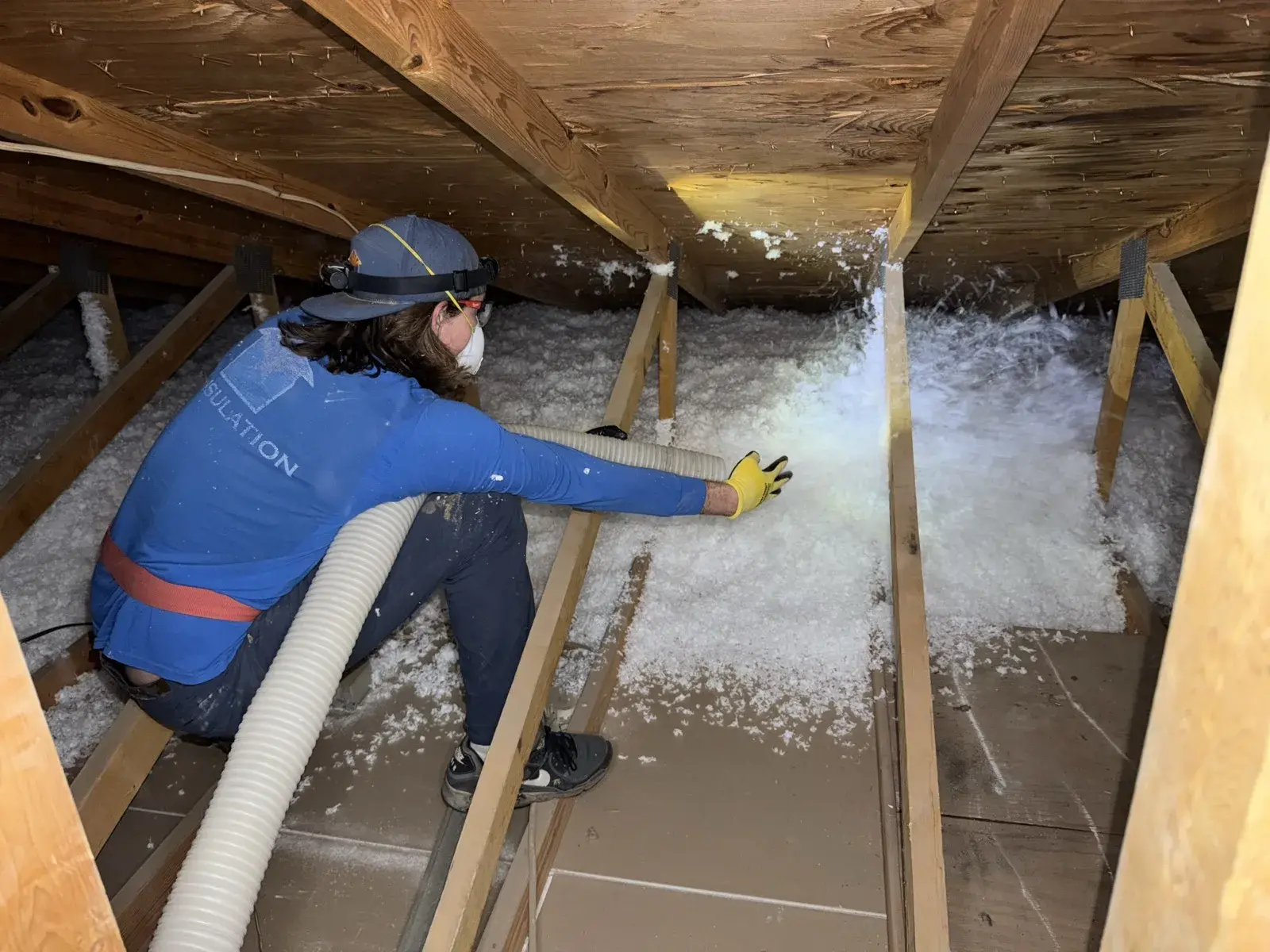
Even blown-in fiberglass coverage across a finished Mesa attic
248
Another Mesa attic, finished and rebate-ready.
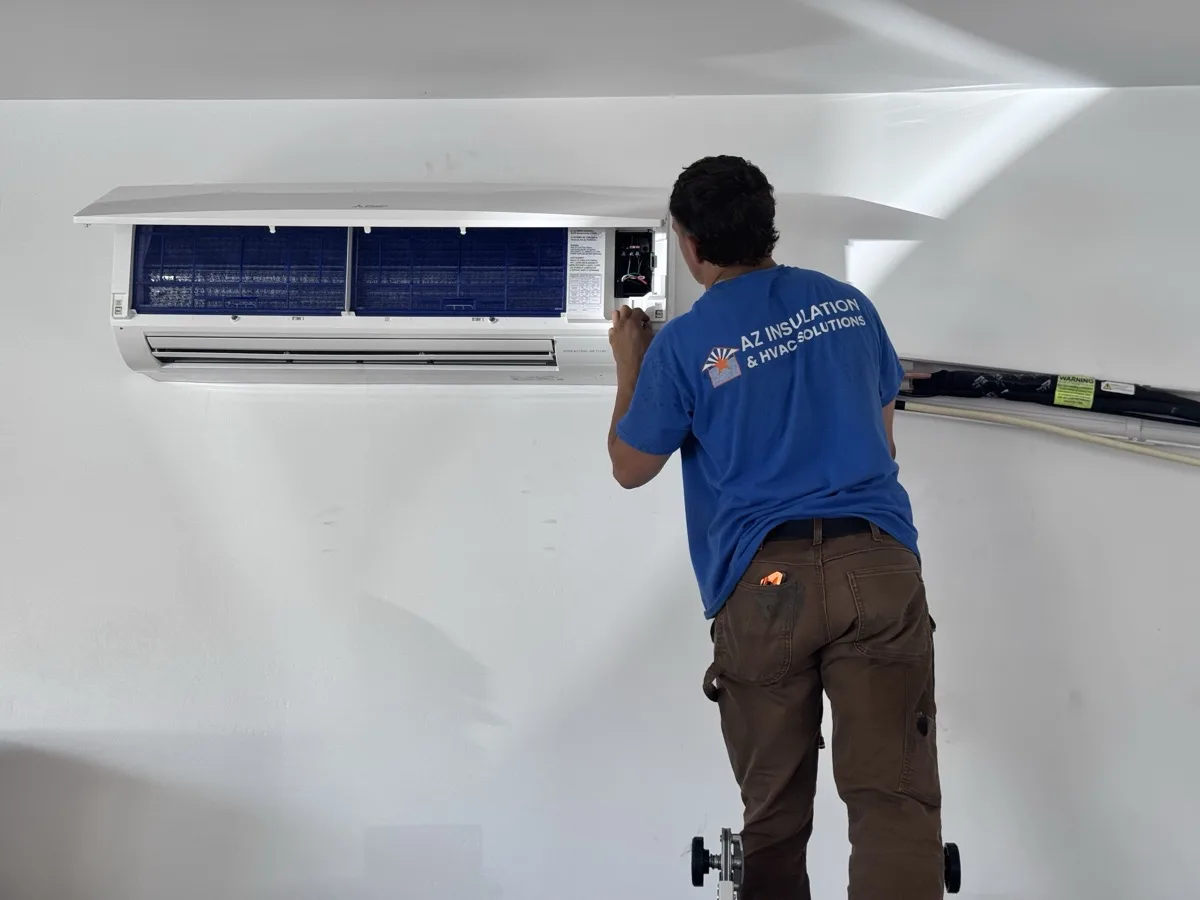
Mini-split install in a Gilbert garage conversion
192
Mini-split install in a Gilbert casita — quiet & cool.
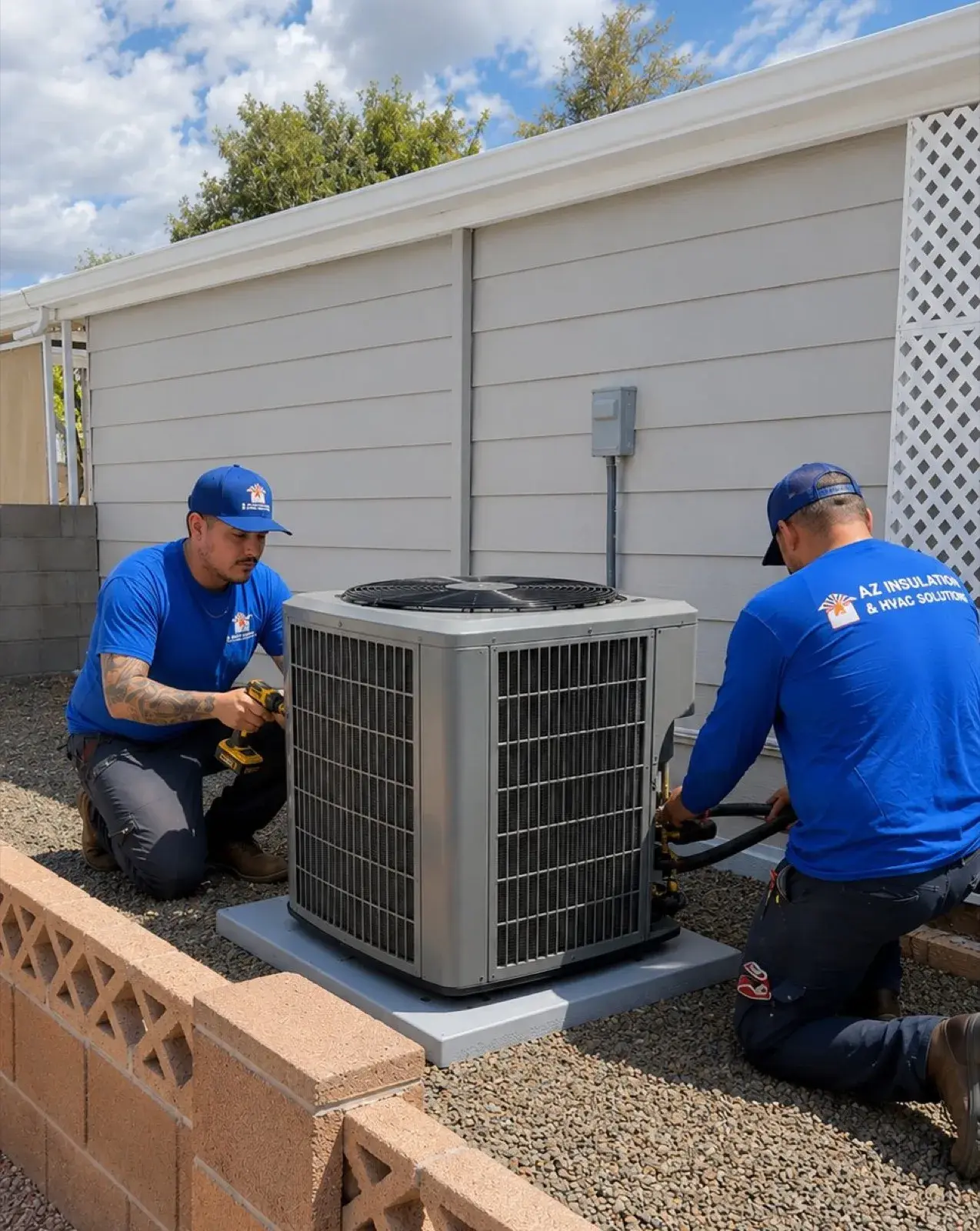
New high-efficiency AC install
314
New high-efficiency AC, sized right for the AZ heat.
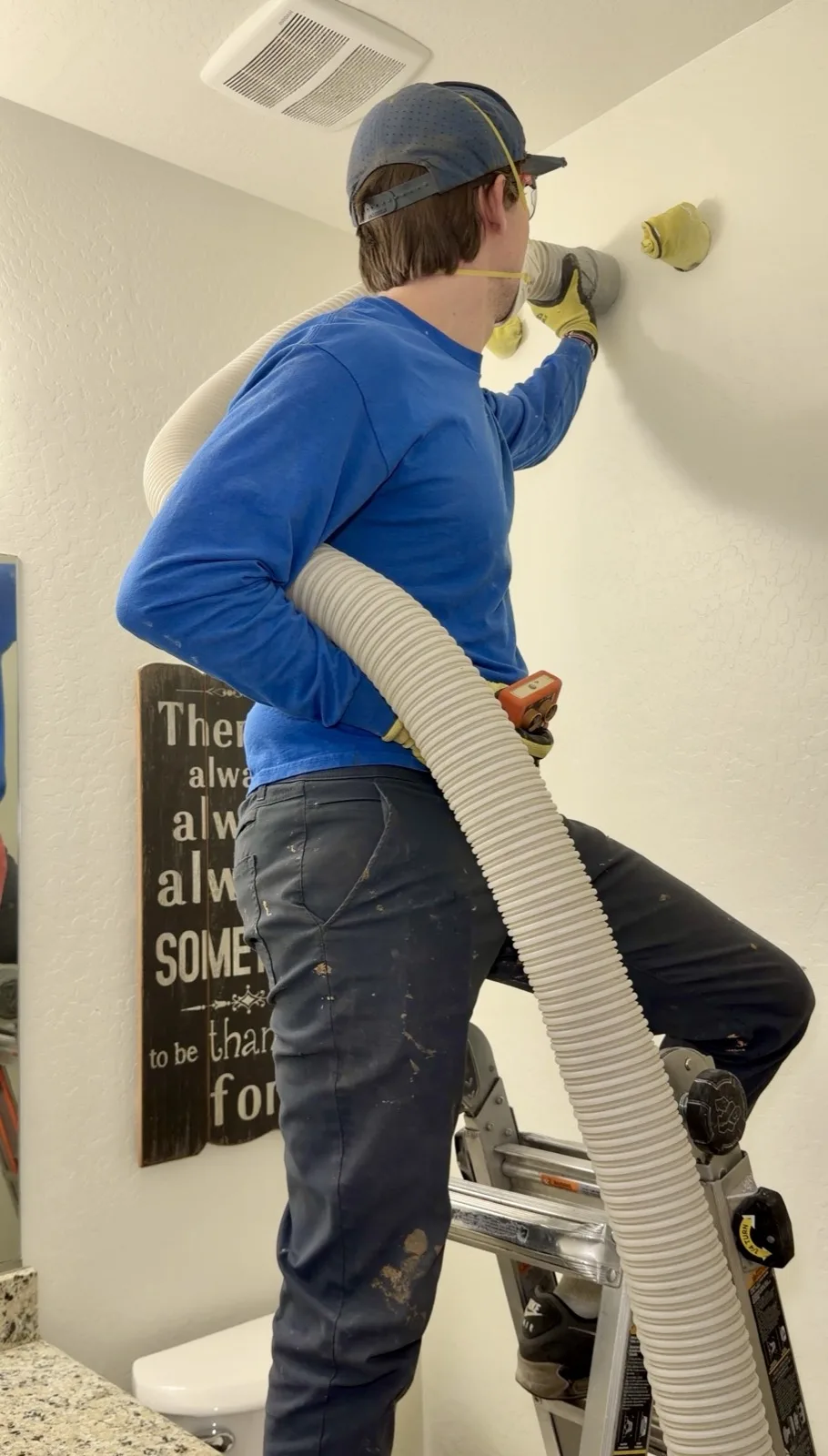
Wall insulation on a Chandler remodel
176
Sealing up the walls on this Chandler remodel.
Want more years out of the system you already have?
Free inspection & rebate check · up to $600 off with SRP · no pressure
480-662-2874 Get my free quote