Best Attic Insulation for Phoenix Homes: R-Values, Costs & SRP Rebates (2026)
The honest version of what works in Arizona heat — how much insulation you actually need, what it costs this year, and how the SRP rebate knocks up to $600 off the price.
 By the AZ Insulation crew 12 min read Updated July 2026 BPI-certified · ROC# 301682
If your upstairs bedroom is 10 degrees hotter than your living room, your AC never seems to shut off, and your July SRP bill made you say something you wouldn’t repeat in front of your kids — your attic is probably the problem.
We’ve been crawling around Valley attics since 2014. Here’s the honest version of what works in Arizona heat, how much insulation you actually need, what it costs in 2026, and how the SRP rebate can knock up to $600 off the price. No sales fluff.
What’s the best insulation for an attic in Phoenix?
For Phoenix-area attics, professionally installed blown-in fiberglass at R-38 or higher, combined with attic air sealing, is the best attic insulation for hot climates. It resists heat transfer without settling, doesn’t absorb moisture, isn’t attractive to pests, and it’s the option that qualifies for the SRP insulation rebate.
Three reasons blown-in fiberglass wins in the desert
- It doesn’t settle or break down. Cellulose is paper-based — it compacts and degrades over the years, and the R-value goes with it. Fiberglass holds its loft permanently, which is why we back every blown-in fiberglass install with a lifetime warranty.
- It fills the gaps batts miss. Blown-in flows around trusses, wiring, and odd framing angles. Batts leave voids at the edges — and voids are where your cool air escapes.
- It handles monsoon humidity. Fiberglass doesn’t soak up moisture or hold it against your drywall.
Spray foam gets a lot of hype online. It performs well, but it costs three to four times as much per square foot, and for a standard Phoenix attic floor it rarely earns back the difference. We’ll tell you that in person too.
R-value only measures resistance to heat conduction. Air leaking through your can lights, attic hatch, and top plates bypasses insulation entirely. R-60 over a leaky ceiling underperforms R-38 over a sealed one. Air seal first, then insulate. SRP requires it for the rebate, and it’s the single biggest reason two homes with identical insulation get very different bills.

Best attic insulation for hot climates: why Arizona is different
In cold climates, insulation keeps heat in. In Phoenix, it keeps a 160°F attic from radiating down into your living space for six months a year. That means depth, complete coverage, and air sealing matter more here than almost anywhere in the country.
Phoenix sits in DOE Climate Zone 2B — hot and dry. On a 112° afternoon your attic can hit 150–160°F. That heat load presses down on your ceiling all day and keeps radiating into your rooms well after sunset, which is why your AC runs at 9 p.m. and your bedroom still feels warm at 11.
Homes built in the Valley before 2000 were typically insulated to R-19 or less. Some of the older Mesa and Phoenix housing stock we inspect comes in under R-11. That was code at the time. It is nowhere near enough for today’s summers or today’s electric rates.
How much insulation do I need in my attic?
Arizona code and the SRP rebate program both target R-38 for attics over living space. R-38 is the number to hit. If your attic is easy to access and you’re already paying for the crew and the equipment, going to R-49 costs relatively little more and buys you extra margin against desert heat.
| R-Value | What it means for your home |
|---|---|
| R-11 to R-19 | Common in pre-2000 Valley homes. Under-insulated. Qualifies for the SRP rebate. |
| R-30 | Better, but below current Arizona code for attics over conditioned space. |
| R-38 | The target. Arizona code recommendation and the SRP rebate benchmark. |
| R-49+ | Upgrade level. Worth it if access is good and you want maximum summer performance. |
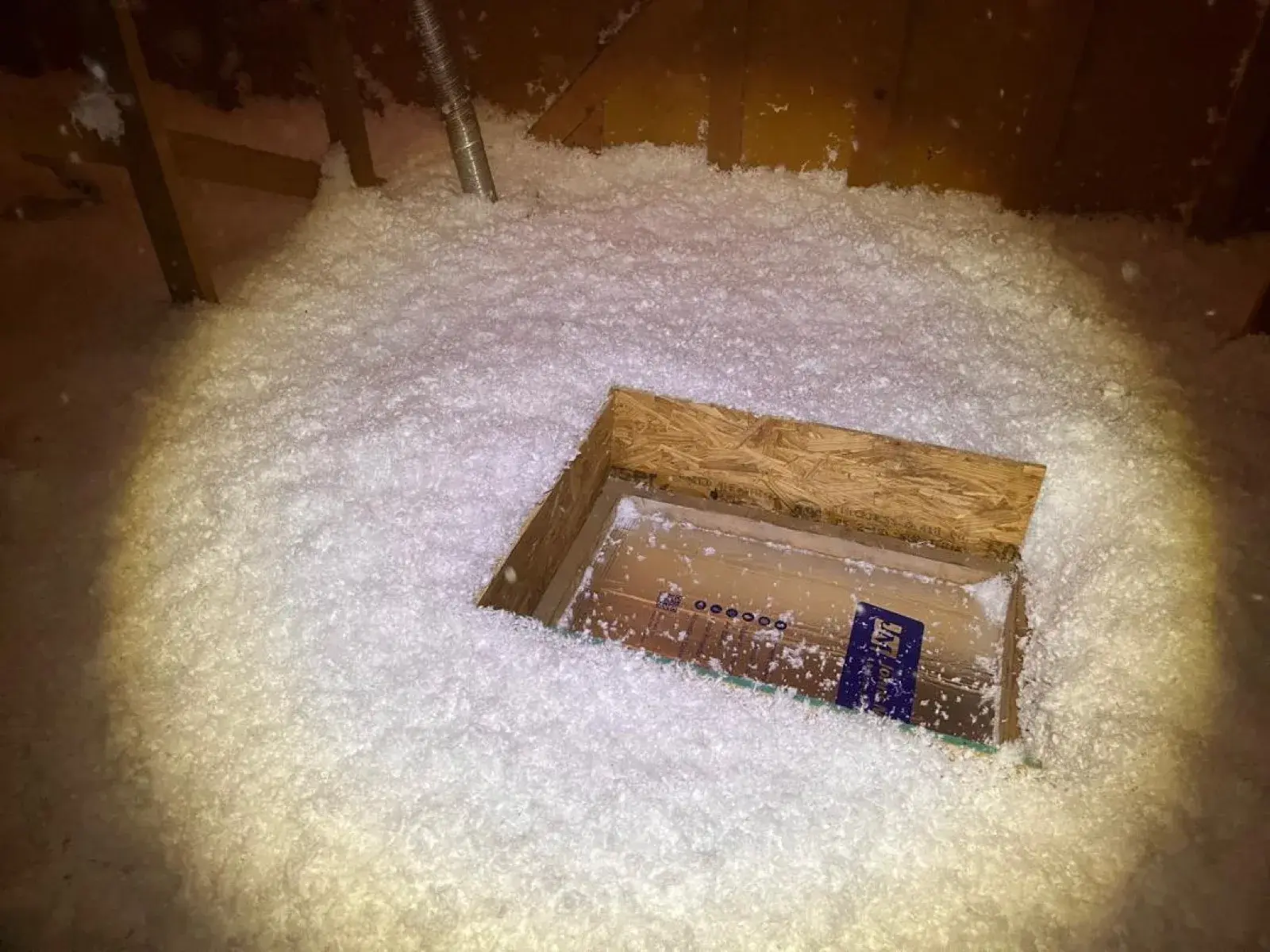
Open your attic hatch, shine a flashlight across the floor, and look at your ceiling joists. If you can see the tops of the joists, you have roughly 6 inches or less — likely R-19 or under. If the insulation is level with the joists, you’re around R-19 to R-22. Insulation should sit several inches above the joists, not level with them.
Recommended insulation depth for attic (Phoenix R-value chart)
To reach R-38 you need roughly 13 to 15 inches of blown-in fiberglass, or about 10 to 12 inches of blown-in cellulose. Cellulose needs less depth for the same R-value, but it settles 10–20% over time — so its installed depth drops and the R-value drops with it.
| Target R-Value | Blown Fiberglass ~R-2.5–2.9/in | Blown Cellulose ~R-3.5–3.8/in | Fiberglass Batts ~R-3.2/in |
|---|---|---|---|
| R-30 | 11–12 in | 8–9 in | ~9.5 in |
| R-38 | 13–15 in | 10–12 in | ~12 in |
| R-49 | 17–20 in | 13–15 in | ~15 in |
| R-60 | 21–24 in | 16–18 in | ~19 in |
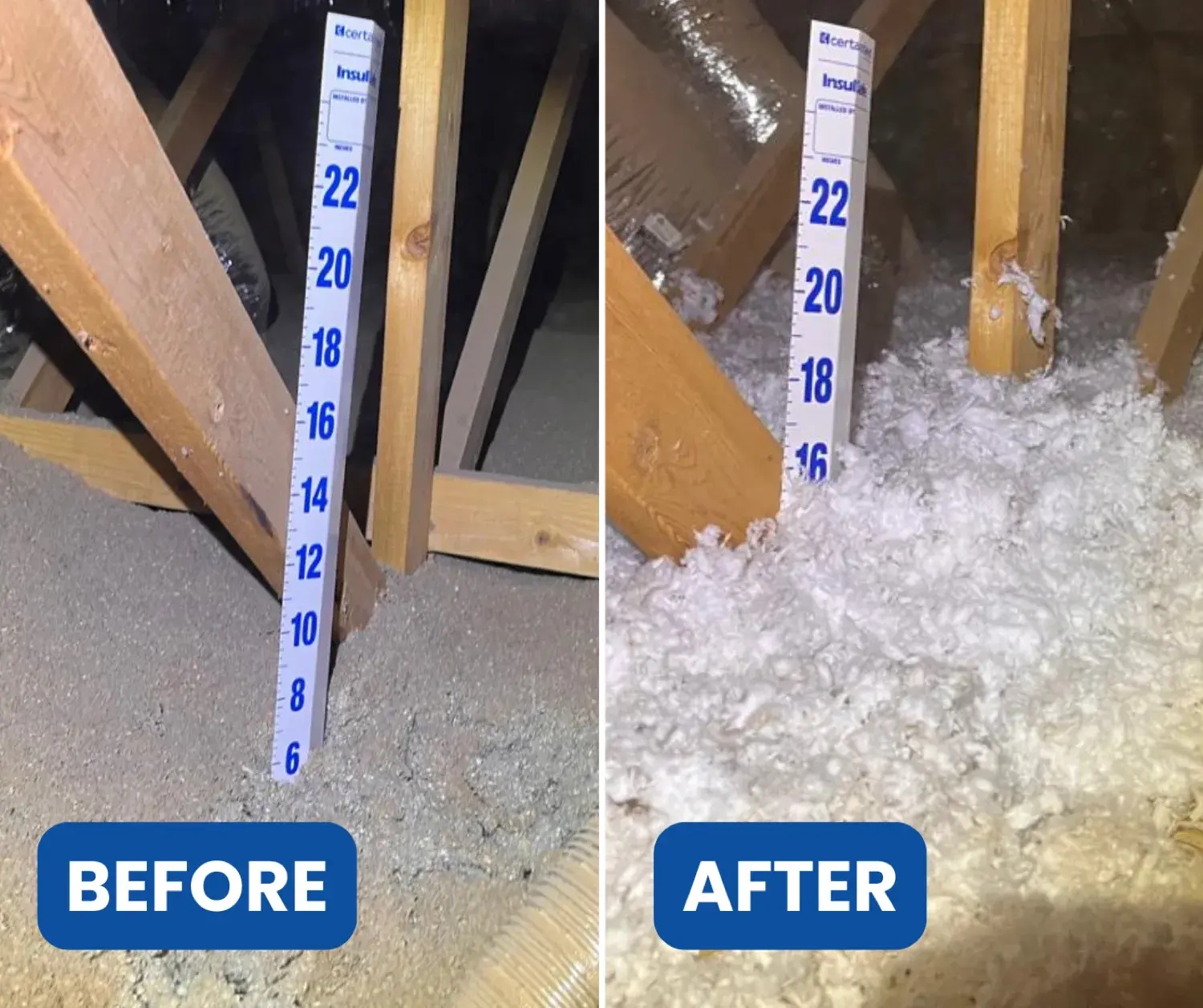
How to calculate your own number: measure your current depth in inches, multiply by the R-per-inch of what’s up there, and subtract from your target. Example: 5 inches of old fiberglass ≈ R-13. To reach R-38 you need about R-25 more, which is roughly 9 to 10 additional inches of blown fiberglass on top.
Two things that quietly wreck real-world R-value
- Compression. Batts rated R-19 only deliver R-19 at full loft. Boxes stacked on attic insulation, or batts stuffed into a shallow cavity, deliver far less than the label.
- Settling. If your attic was blown to 14 inches of cellulose a decade ago, it may be 11 today. Measure what’s there now — not what the invoice said in 2015.